No Gatekeepers, No Problem: The Self-Publishing Collectives Rewriting Who Gets to Tell Stories

Photo: Holger Krisp, CC BY 3.0, via Wikimedia Commons
For a long time, the path to becoming a "real" author looked pretty much the same: write your book, find an agent, hope that agent finds an editor, wait eighteen months, and maybe — maybe — see your name on a spine at Barnes & Noble. The whole process could take years. And if your story didn't fit neatly into what acquisitions editors thought their demographic wanted to buy? You were usually just out of luck.
But something has been quietly shifting in living rooms, community centers, and yes, actual basements across the US. Writers — particularly those from communities that traditional publishing has historically ignored — are building their own lanes. Not as a consolation prize, but as a deliberate, joyful act of cultural self-determination.
The Collective Model: More Than Just Splitting Printing Costs
When people hear "self-publishing collective," they sometimes picture a group of friends splitting the cost of a print run and calling it a day. The reality is a lot richer than that.
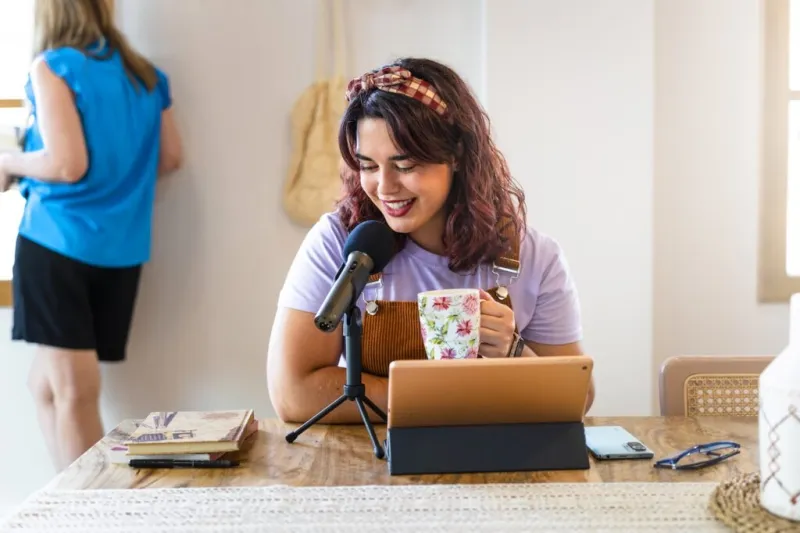
These collectives function more like literary mutual aid networks. Members share editing labor, pool resources for cover design, organize joint readings, and — crucially — bring their individual audiences together into something bigger. A novelist whose following lives mostly on Instagram might cross-pollinate with a poet whose readers show up at open mics. A memoirist writing about her experience as a first-generation Salvadoran American might find her work amplified by a collective that already has relationships with community bookstores, cultural centers, and local libraries.
The connective tissue matters as much as the books themselves. These aren't just publishing operations. They're communities of practice, spaces where writers workshop each other's drafts, debate what it means to write authentically about their own cultures, and hold each other accountable to finishing the thing.
Who's Actually in the Room
The demographics of these collectives tell you a lot about who the traditional publishing industry has been leaving on the table.
Black women writers have been among the most visible organizers of independent literary circles, building on a long tradition of Black press culture in the US that stretches back to Frederick Douglass and Ida B. Wells. Indigenous authors have formed collectives specifically to tell stories on their own terms, outside of the "Native voice" box that mainstream publishers tend to impose. Queer writers, disabled authors, working-class storytellers who can't afford the unpaid internship pipeline that feeds so many traditional publishing careers — they're all here, and they're not waiting.
What's notable is that many of these collectives explicitly reject the idea that going indie is a stepping stone to eventually landing a traditional deal. For a lot of members, the collective is the destination. The relationships, the creative freedom, the ability to keep a larger percentage of royalties and maintain control over their own work — these aren't compromises. They're the point.
The Reader Side of the Equation
It would be easy to frame this whole story as being about writers, but the reader experience is just as transformed.
When you pick up a book from an independent collective, you often know something about where it came from. You might have heard the author read an excerpt at a community event. You might have followed the cover design process on social media. You might have bought the book directly from the author at a neighborhood market, which means your ten or fifteen dollars went almost entirely to the person who wrote the thing you're about to read.
That intimacy changes how people engage with literature. Readers who feel personally connected to an author's journey tend to become fierce, loyal advocates. They recommend the book to friends. They show up to the reading series. They leave reviews not because they were asked to, but because they feel genuinely invested.
For communities that have historically been told their stories aren't commercially viable, finding a book that reflects their experience — written by someone from their own neighborhood, sold at their local cultural center — can feel like a revelation. Not just representation in the abstract, but proof that their stories exist and matter and belong on a shelf.
The Practical Reality (Because It's Not All Magic)
None of this is easy, and anyone who tells you otherwise is probably trying to sell you a self-publishing course.
Distribution remains a genuine challenge. Getting indie titles into physical bookstores requires relationships, persistence, and often a tolerance for consignment arrangements that can feel precarious. Discoverability in a crowded digital marketplace is brutal without marketing budgets. Editing, design, and printing costs add up fast, even when collectives share the load.
Burnout is real, too. The same people who are doing the creative work often end up running the social media, booking the venues, managing the finances, and answering every email. Building sustainable structures — actual governance, clear roles, healthy boundaries — is something a lot of collectives are still figuring out as they go.
But here's what keeps people in it: the traditional publishing industry isn't actually offering a better deal for most writers. Advances for debut authors have stagnated. Royalty rates remain low. Marketing support for midlist authors is often minimal. And the gatekeeping, while it has loosened somewhat, still reflects deep structural biases about whose stories are considered universally relatable.
What the Commons Looks Like
At its best, the independent literary collective movement is building exactly what Cultural Commons has always believed in: creative infrastructure that belongs to the community it serves.
That looks like a monthly reading series in a Chicago community center where the featured author is also the person who set up the chairs. It looks like a print collective in Oakland that teaches bookbinding workshops so members understand every step of making the object they're selling. It looks like a group of Latinx writers in Houston who started a zine and ended up publishing six full-length books in three years, none of which would have existed if they'd kept waiting for someone else to say yes.
The gatekeepers didn't disappear. These writers just stopped needing them.
And honestly? The books are better for it.