Tacos, Turntables, and Open Mics: When the Food Truck Lot Becomes the Culture Spot
The show starts when the grill does.
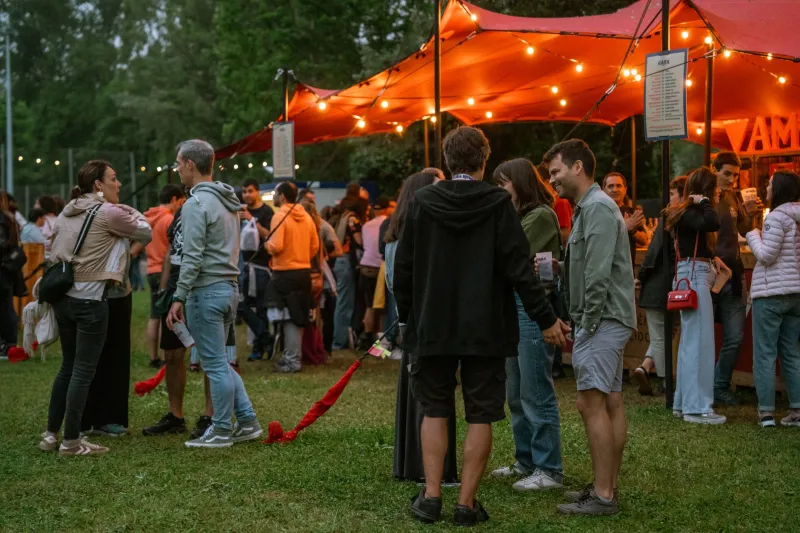
At 6 p.m. on a Friday in East Austin, the line for barbacoa is already ten deep, but nobody's really here for the tacos alone. Tonight, the truck's folding tables have been pushed aside, a PA speaker borrowed from somebody's cousin leans against the bumper, and three poets are doing soundcheck next to the propane tank. By dark, there will be forty people here, eating elote and listening to verses about rent, grief, and second chances — in a parking lot, under string lights, for free.
This is the new geography of American culture. Not the black box theater. Not the $90-a-ticket club downtown. The food truck lot. The community kitchen. The church annex with a commercial stove.
The Venue Desert Is Real
Ask anyone who's tried to book a show in the last decade: traditional venues are struggling, and the neighborhoods that could use them most often never had them to begin with. Independent clubs have closed at a staggering rate since 2020, squeezed by rising rents, insurance costs, and a booking economy that favors national tours over local openers.
But here's the thing about a food truck: it doesn't need a marquee. It needs a permit, a hitch, and a parking spot. The overhead that's crushing music venues — the lease, the liquor license, the sound system — simply doesn't exist. And a community kitchen, often already sitting underused in a rec center or nonprofit space, has tables, chairs, and a room that smells like somebody's grandmother's cooking.
So organizers started asking a simple question: if the food is already drawing a crowd, why not give them something to watch while they eat?
Trading Parking Spots for Poetry
In Los Angeles, a birria truck owner named Marisol (who asked to be identified by her first name because, in her words, "the health inspector and I have an understanding, not a friendship") started hosting Sunday-night readings in the lot where she parks. She brings the truck; a local lit collective brings the mic. "People come for the quesabirria," she laughs. "They stay because some nineteen-year-old is reading a poem about his dad and half the line is crying."
In Detroit, a shared commercial kitchen that rents space to home bakers and immigrant food entrepreneurs opens its dining room one Saturday a month for pop-up art shows. The walls — usually hung with health permits — get covered in work from neighborhood painters. Sales happen on the honor system and a Cash App QR code taped to the steam table.
In Portland, a collective of taco cart owners in a pod on Division Street started rotating live sets between the carts. A cellist plays while the flat-top hisses. A DJ spins between lunch and dinner rush. Nobody charges a cover. The tip jars do the math.
Why It Works (When It Works)
The food-as-venue model has some real advantages that traditional cultural institutions should study instead of sneer at:
The audience is already there. You don't have to convince anyone to come out. They came for dinner. Culture is the side dish that becomes the meal.
The barrier to entry is a folding chair. No stage door, no door policy, no "is this a sit-down or standing room" anxiety. A kid in basketball shorts and a retired teacher in a cardigan are equally welcome, equally fed.
The economics are upside down in a good way. At a traditional venue, the artist needs the crowd to pay for the space. At the truck, the food pays for the space, and the artist gets a crowd, tips, and a plate of al pastor.
It meets people where they already are. Cultural equity advocates have spent decades pointing out that arts funding tends to flow to institutions in neighborhoods that already have institutions. The truck lot inverts that: it goes to the block, stays for a season, and moves where it's wanted.
The Complications Nobody Puts on the Flyer
None of this is friction-free. Food truck operators navigate a maze of local ordinances, and adding amplified music or "gatherings" can trigger permit requirements that vary wildly from one city to the next. In some jurisdictions, a recurring event with a speaker system technically turns a parking lot into a place of assembly — and the paperwork follows.
There's also the labor question. Marisol is blunt about it: "Somebody's got to wipe the tables. If the poetry night brings fifty people and twelve buy tacos, I'm losing money on a Tuesday." Some collectives solve this with a suggested donation that goes straight to the operator. Others split merch tables. The ones that last are the ones that treat the cook as a partner, not a backdrop.
And weather, as any outdoor organizer knows, is a business partner you never chose.
A Blueprint Hiding in Plain Sight
For cultural funders and city arts agencies, the food truck model offers a template worth stealing: radically low overhead, hyperlocal reach, and a built-in social function that doesn't depend on anyone feeling like they belong in an arts space. Some cities are starting to catch on — pilot programs in a handful of metros now let mobile vendors apply for event permits as a bundle rather than one-off approvals, and a few arts councils have started micro-grants specifically for "food-based cultural programming."
But honestly, most of this movement isn't waiting for permission. It's happening because a cook with a truck and a poet with a notebook decided the empty lot was enough.
Back in Austin, the last poet of the night finishes to whoops and the clatter of trays being bussed. Marisol kills the string lights one strand at a time. Tomorrow she's back to feeding the lunch rush; next Sunday, the mic comes out again.
"People say, 'I didn't know this was a venue,'" she says, unhooking the speaker. "It's not a venue. It's dinner. Dinner's just got a soundtrack now."
Maybe that's the whole point. The most democratic stage in America might not be a stage at all. It might be wherever the food is.