One Bell Each: The Musical Experiment Where Nobody Gets to Be a Soloist
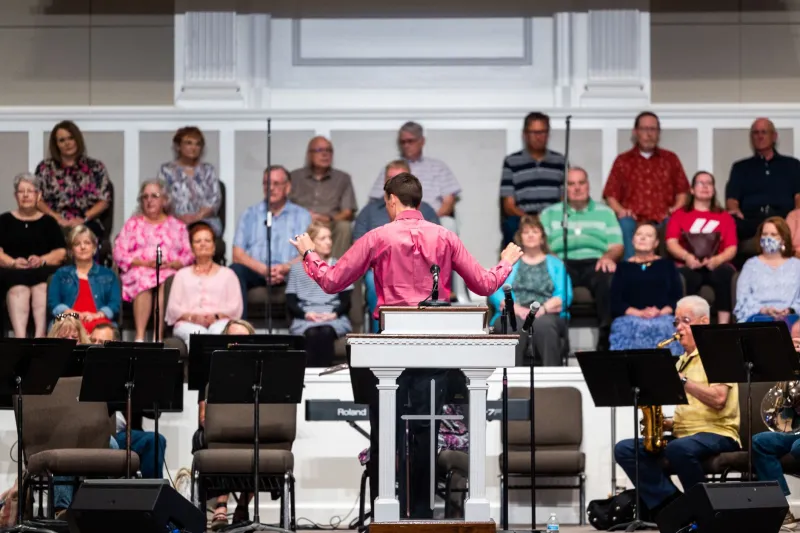
Here's the thing about a handbell choir that makes it fundamentally different from every other musical ensemble you've ever encountered: nobody in the room can play the song. Not the director, not the most seasoned ringer with thirty years under their belt. Each person holds two, maybe four bells—a few notes out of dozens—and the melody only exists when everyone does their part at exactly the right moment.
It's the only instrument in America that is structurally incapable of being played alone. And that, a growing movement of ringing directors will tell you, is precisely the point.
The Instrument That Refuses Ego
Walk into a community handbell rehearsal—whether it's in a Methodist church basement in Ohio, a public library meeting room in suburban Denver, or a senior center in Portland—and you'll find something a little absurd and a little beautiful: adults in their seventies standing next to teenagers, a software engineer next to a retired school nurse, all of them staring intently at sheet music that's mostly about counting rests.
Because that's the secret handshake of handbells. Most of your job is waiting. You might have one note in an entire page, and when it comes, you'd better hit it. The rest of the time, you're holding your bells, following along, trusting the web of sound to hold together without you—until the moment it very much needs you.
"People think that sounds stressful," says a longtime ringing director I'll call the kind of person who has recruited half her neighborhood. "But it's the opposite. Nobody carries this alone. There's no first chair. There's no soloist. The bell that rings is the star for exactly one second, and then it's someone else's turn."
That structure does something to people. Ask around any community ensemble and you'll hear versions of the same confession: this is the first time many ringers have made music since middle school band, if ever. The barrier to entry is famously low. If you can move your wrist, you can ring. The director will teach you the rest.
Feeling the Music Differently
One of the most remarkable threads in the handbell world is its growing inclusivity—and not just in the generational sense. Several ensembles across the country have opened their tables to deaf and hard-of-hearing ringers, who play by resting a hand or forearm on the table's surface, reading the vibrations the bells send through the wood.
For these musicians, the experience is tactile in a way hearing ringers rarely consider. The table becomes an instrument in itself—a shared surface that hums when the choir is in full voice. Sighted and deaf ringers learn to cue off each other, developing visual and physical signals that replace what the ear would catch. Directors describe it as the most attentive rehearsal rooms they've ever run, because everyone has to actually pay attention to each other.
There's a lesson buried in there that extends well beyond music. When you remove the assumption that everyone experiences the same thing the same way, you end up building something more deliberate, more communicative, and honestly, more connected. The deaf ringers aren't accommodated at the table—they change what the table is.
Why This, Why Now
It would be easy to file handbells under quaint—a holdover from church basements and Christmas Eve services. But the movement's recent growth tracks with something bigger this site keeps coming back to: the nationwide scramble for what sociologists call third places, the spots that aren't home and aren't work where community actually gets built.
The board game cafés and rec leagues and pub quizzes we've covered before all scratch that itch. Handbells do it with a twist: they add the element of mutual dependence. In a trivia team, you can carry your weight or coast. In a handbell choir, there is no coasting and no carrying. Your G-sharp is yours, and the song needs it.
Ringers describe the effect in almost embarrassingly sincere terms. A first-timer in her forties put it this way after her first season: "I've spent my whole life being told to be self-sufficient. Then I joined this group where my entire job is two notes, and I've never felt more useful."
That's the metaphor doing quiet work here. In an era of curated solo everything—solo playlists, solo streaming, solo scrolling—handbells are a weekly rehearsal in being small but essential. You are one bell. The song does not exist without you, and it also does not exist without eleven other people showing up on a Tuesday.
How to Find Your Note
If this sounds like your kind of Tuesday night, the good news is that handbell groups are desperate for ringers almost everywhere. Church ensembles are the traditional backbone, but public libraries, community music schools, senior centers, and community colleges increasingly host secular groups. Many ensembles run open rehearsals or beginner workshops, and loaner bells are standard—nobody expects you to own a chromatic set.
A few tips from the ringing world:
- Show up even if you've never read music. Directors routinely teach absolute beginners. The counting is learnable in weeks.
- Ask about "bell assignments." New ringers often start with a few notes in the middle range—forgiving, visible, and central to the action.
- Don't worry about your age or ability. Intergenerational tables are the norm, not the exception, and adaptations for mobility or hearing differences are more common than most people assume.
- Expect commitment to matter more than talent. Your absence doesn't just leave a hole in the roster—it silences specific notes in the song.
That last point is really the whole philosophy. Handbell choirs run on the radical assumption that you will be there, that your small part matters, and that the group is something you build together, week after week, one ring at a time. In 2020s America, that might be the most countercultural instrument of all.