The Channel That Wouldn't Die: Public Access TV's Unlikely Glow-Up
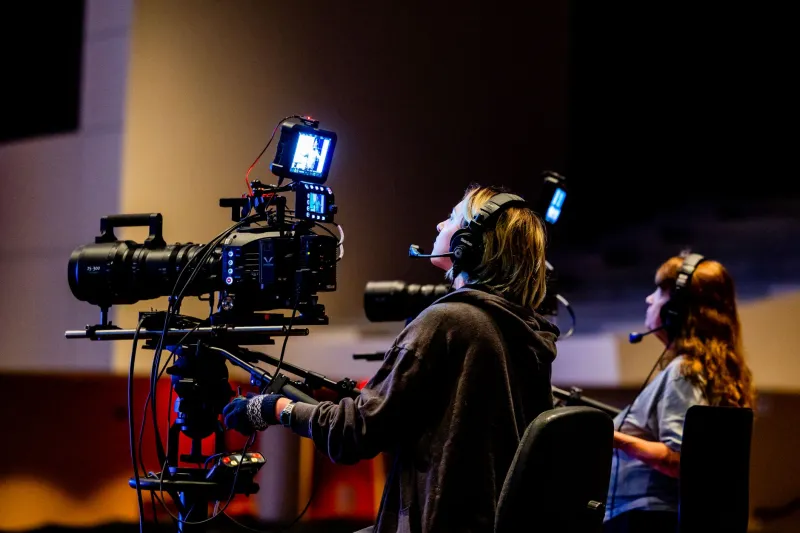
There's a certain kind of television that never makes it onto any 'best of' list. The lighting is fluorescent. The camera occasionally drifts, as if the operator just remembered they left the oven on. And yet, in town after town across America, this is the programming people actually trust.
Public access TV — born in the 1970s out of cable franchise agreements that required companies to fund community media in exchange for wiring your street — was supposed to be dead by now. The internet was supposed to eat it. Streaming was supposed to bury it. Instead, something strange is happening: community media centers are having a second act, and it looks nothing like the public access stereotype.
From Cable to Everywhere
Walk into a modern community media center and you might not find a TV studio at all. You'll find a podcast booth. A green screen. A teenager editing a video that will hit YouTube before dinner. The equipment changed; the mission didn't.
"We stopped thinking of ourselves as a television station and started thinking of ourselves as a media kitchen," one longtime volunteer producer told us, describing how her station now distributes the same city council coverage across cable, a website, a podcast feed, and social clips. "People didn't stop needing local information. They just stopped needing it at 7 p.m. on channel 23."
That flexibility has turned out to be a lifeline. As newspapers collapse — more than 2,500 have vanished since 2005, leaving millions of Americans in news deserts — the local government meeting broadcast sometimes has more regular viewers than the local paper has subscribers. It's not flashy. It's just the only place you can watch the people making your zoning decisions make them.
The Training Ground Nobody Noticed
Here's the part that rarely makes headlines: these stations are also workforce development programs in disguise.
Community media centers run media literacy and production classes for kids who've never touched a real camera, seniors learning to record oral histories, and immigrants producing shows in languages their neighbors' grandparents never heard on local TV. In a media landscape where the barrier to entry is a smartphone but the barrier to skill remains high, these centers are the rare place where anyone can learn the craft for free.
The alumni list is longer than you'd think. Plenty of people in commercial media got their first hands-on camera time in a community studio, fumbling through a three-camera shoot of the high school holiday concert.
Why It Matters More Than Ever
The case for public access used to be about access to distribution — back when airwaves were scarce. Now the case is about something scarcer: trust.
When a hyperlocal story gets covered by a volunteer who lives three streets away from the subject, it reads differently than when it's covered by a private equity-owned outlet two states away. Community media is accountable to its neighbors, not to a shareholder call. That's not nostalgia. That's infrastructure.
There's also a cultural argument. National entertainment is a homogenizing force — the same shows, the same voices, the same algorithms everywhere. Community media is the counterweight: the polka hour, the Hmong-language talk show, the high school football broadcast, the oral history project with the last generation of mill workers. It's culture made by a place, not merely delivered to it.
The Catch
None of this is guaranteed. The funding model — those cable franchise fees — is eroding as people cut the cord, and Congress has periodically eyed those revenues hungrily. Many centers survive on grants, donations, and duct-tape budgeting.
Which is why the second act matters. Stations that reinvented themselves as multimedia hubs, youth programs, and civic archives are the ones still standing. The ones that clung to the old model, well, aren't.
Your Turn Behind the Camera
The best thing about community media is that it's not a thing you watch. It's a thing you do. If your town has a community media center — and most do, even if you've never noticed it — it probably needs volunteers, board members, and yes, people willing to sit in the studio and talk about the things that matter on your block.
The revolution will not be televised. Honestly, it never was. But it might be livestreamed, podcasted, and uploaded by the person in the next cubicle — and that might be better.