Level Up at the Library: The Quiet Revolution Turning Stacks into Servers
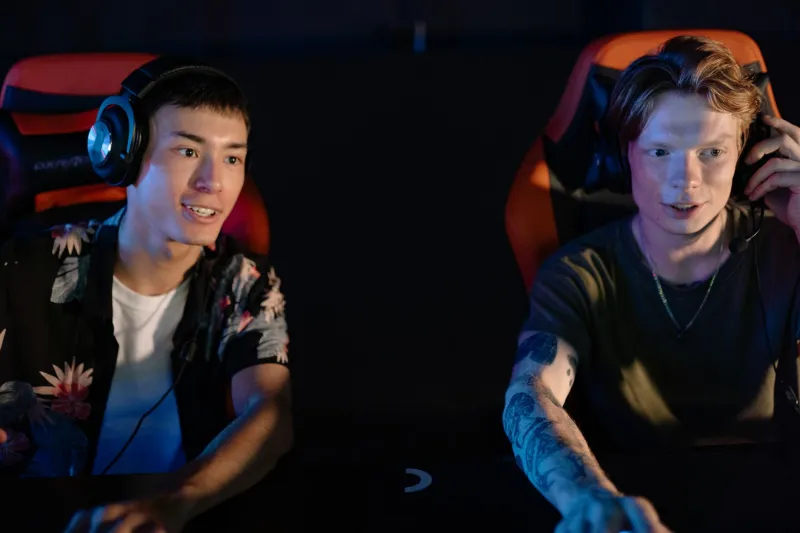
Walk into the public library in McAllen, Texas on a Saturday afternoon and you'll hear it before you see it: the roar of a crowd, the thump of a controller dropped in victory, a librarian shouting "final round!" over the din. Downstairs, someone's quietly browsing the new fiction shelf. Upstairs, forty teenagers are losing their minds over a Super Smash Bros final.
Both experiences are the library now. And honestly? That might be the most radical thing happening in American civic life.
From Shhh to Let's Go
For decades, the stereotype of the public library was a stern-faced guardian shushing anyone who dared to exist too loudly. That image is dying, and good riddance. In its place: circulation desks that check out Nintendo Switches, meeting rooms transformed into esports arenas, and librarians who know the difference between a Smash main and a Mario Kart main.
The numbers tell the story. A growing share of public libraries now lend video games, and systems from Los Angeles to Hartford, Connecticut have built dedicated gaming programs. The Seattle Public Library runs an annual esports tournament that draws hundreds of competitors. Libraries in rural Iowa and urban Philadelphia alike report that gaming programs bring in patrons — especially teens and young adults — who hadn't set foot in a library since elementary school.
The genius of it is the bait-and-switch that isn't really a bait-and-switch. Kids come for the tournament. They stay because the library is warm, free, safe, and staffed by adults who genuinely want them there. Then, somewhere along the way, they discover the graphic novel section, the maker space, the college prep resources, the quiet room when home gets too loud.
The Librarian as Cultural Connector
Nobody embodies this shift more than the librarians themselves. Ask around and you'll hear the same refrain: the job used to be about guarding materials. Now it's about building community.
Consider the librarian in rural Ohio who noticed that the closest rec center was a forty-five-minute drive away, so she started a weekly tabletop night. Now her library hosts a rotating cast of sixty players — retirees teaching middle schoolers how to play Catan, farm kids running Dungeons & Dragons campaigns for the first time. Or the branch manager in Atlanta who turned a disused computer lab into an esports lounge, complete with donated gaming PCs and a streaming setup that local teens use to learn broadcasting skills.
These aren't gimmicks. They're a rethinking of what a public institution owes its community. If the mission is access — to information, to culture, to each other — then lending a controller is every bit as legitimate as lending a book. Maybe more so, for the kid whose family can't drop four hundred dollars on a console.
Gaming as the New Third Place
There's a term sociologists love: the third place. Not home, not work — the coffee shop, the barbershop, the corner bar, the places where community actually happens. America has been losing its third places for decades, and the loneliness epidemic is partly the bill coming due.
Libraries with gaming programs are quietly becoming the most successful third places in the country. They're free. They're open to everyone — no purchase required, no membership, no dress code. And unlike literally every other screen-based activity, library gaming is almost always social. It's couch co-op energy, multiplayer in the most literal sense: bodies in the same room, cheering and groaning together.
That's the piece the doomsayers miss. The fear was always that video games would isolate people. In the library context, they do the opposite. A teen who spends all day gaming alone in their bedroom will show up to a tournament, meet other kids from three neighborhoods over, and maybe — just maybe — trade Discord handles and build a friendship that outlasts the bracket.
Not Without Pushback
None of this has been friction-free. Some patrons and, yes, some library boards have balked. Isn't the library supposed to be about books? Is taxpayer money going toward Mario Kart?
The librarians' answer is usually patient, sometimes weary: the library has never been just about books. It's had records, then cassettes, then DVDs, then streaming. Every new medium got absorbed. Gaming is simply the culture of the current generation, and an institution that ignores the culture of the young is an institution planning its own irrelevance.
There are practical challenges too — budget constraints, wear and tear on equipment, the logistics of lending fragile electronics to hundreds of households. Some systems handle it with deposits and damage waivers; others just budget for replacements and accept the cost as the price of relevance.
The Blueprint for Public Space
Here's what the gaming library might really be teaching us: the future of public institutions depends on meeting people where they are, not where we wish they were. The library that hosts an esports tournament is making a statement — that civic space belongs to everyone, including the kid in the hoodie who hasn't read a novel since middle school.
And once that kid is in the building? The building works its magic. That's always been the library's superpower. It just needed to update its invite.
Press start. Everyone's welcome.