Learning at the Kitchen Table: Why Neighbors Are Becoming Each Other's Best Art Teachers
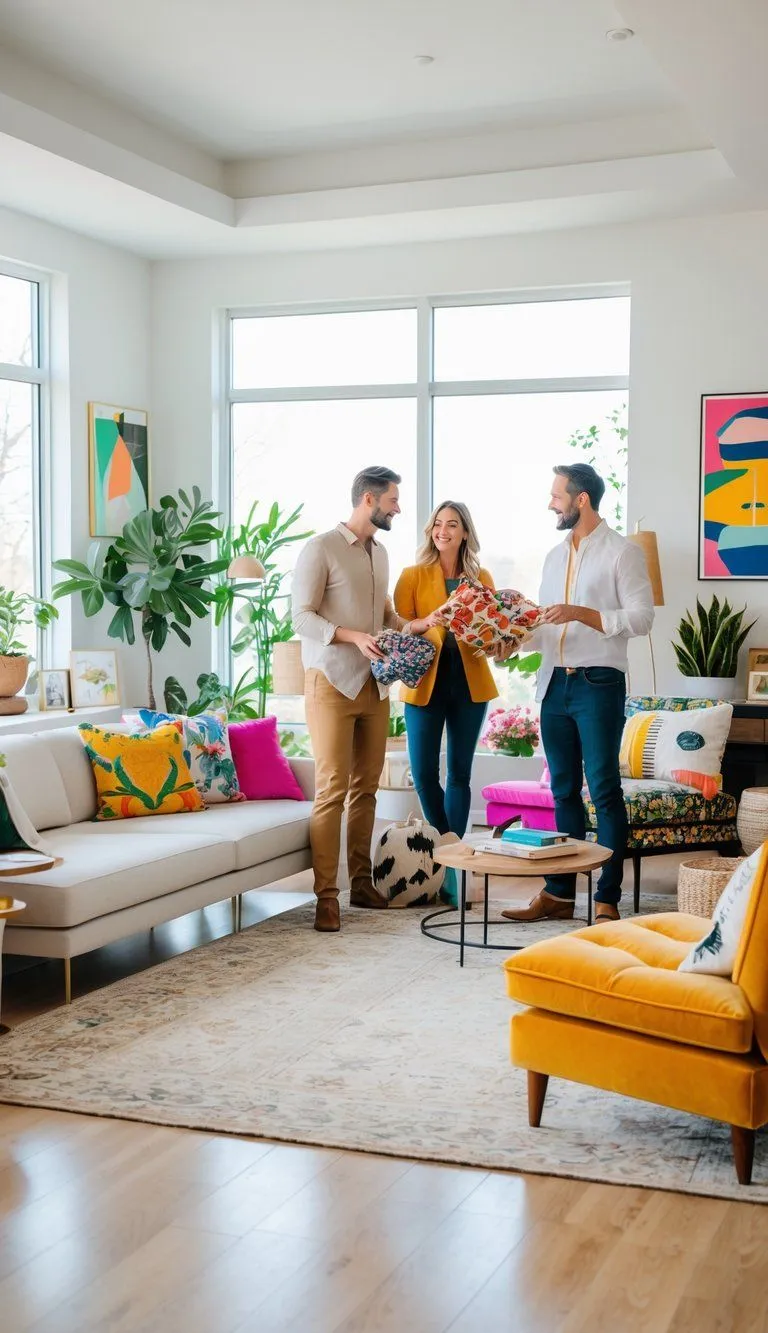
Photo: diverse neighbors crafting together in cozy home living room workshop, via www.e-a-a.com
Somewhere in a third-floor walkup in Cleveland, Ohio, a retired ceramics teacher named Dolores has pushed her dining table against the wall every Saturday morning for the past three years. By 10 a.m., six neighbors — a nurse, a college sophomore, a stay-at-home dad, and a few others who heard about it through the building's group chat — are elbow-deep in clay, laughing, struggling, and making things that are genuinely beautiful. Nobody paid a dime to be there.
This is the kitchen table revolution, and it's happening everywhere.
The Price Tag Problem Nobody Wants to Talk About
Let's be real about something: arts education in this country has a serious access problem. A single semester of pottery at a community college can run you $400 before you even buy supplies. Dance conservatories in major cities charge upward of $150 a month for adult classes. Private music lessons hover around $60–$100 an hour. For working-class families, recent immigrants, or anyone living paycheck to paycheck, those numbers don't just feel steep — they feel like a door slamming shut.
The institutions that were supposed to democratize arts training — community colleges, recreation centers, nonprofit arts organizations — have done meaningful work. But funding cuts, rising overhead costs, and geographic gaps mean they simply can't reach everyone who wants to learn. There are whole neighborhoods, especially in rural areas and low-income urban zones, where the nearest ceramics class might as well be on the moon.
So people stopped waiting for the system to catch up.
What a Living Room Can Do That a Classroom Can't
The informal creative workshop model that's spreading across the country isn't just a workaround for people who can't afford traditional instruction. For a lot of participants, it's actually better — and they'll tell you exactly why.
Take the Eastside Stitch Circle in Austin, Texas, a textile and embroidery collective that started when a woman named Priya posted in her neighborhood Facebook group asking if anyone wanted to learn basic hand-sewing. Twelve people showed up to her apartment. Two years later, the group rotates between five different homes, has taught over 40 neighbors, and recently collaborated on a community quilt displayed at a local library.
"There's no grade. There's no teacher looking at you like you're behind," Priya explains. "People bring their kids sometimes, or their elderly parents. It's just... it feels like something humans are supposed to do together."
That low-pressure intimacy is a recurring theme in these spaces. Without the formal hierarchy of a classroom, learning happens sideways — peer to peer, story to story. Someone who's been sewing for two months teaches a newcomer the basics while the more experienced member across the room works on something complex. Knowledge flows in every direction.
Garages, Basements, and Back Porches as Studios
The physical spaces themselves are part of the magic. In Minneapolis, a muralist named Jerome converted his detached garage into a weekend painting workshop for teenagers in his predominantly Somali-American neighborhood. He charges nothing. Parents drop kids off, stay for coffee, sometimes pick up a brush themselves. Jerome's garage doesn't have climate control or proper ventilation — they open the big door and deal with the Minnesota weather — but the kids keep coming back.
"I learned in spaces like this," Jerome says. "Someone's uncle had a space, and they let you in. That's how culture moves."
In Los Angeles, a former professional dancer named Camille teaches West African dance forms in her living room twice a week. She moved the furniture out years ago and never moved it back. Her classes draw a mix of Black women from the neighborhood, a few Latinas from down the block, and one older white woman who's been coming for eighteen months and "finally stopped apologizing for her hips," as Camille puts it with a grin.
These aren't just hobby groups. They're ecosystems of mentorship, cultural transmission, and genuine creative development.
Skills Travel Further When They're Shared Freely
One of the most compelling aspects of the home-based creative collective model is what happens after someone learns something. Unlike formal education, where skills are often siloed inside individual careers, the knowledge passed around these kitchen tables tends to keep moving.
The nurse from Dolores's ceramics circle in Cleveland started teaching basic wheel-throwing to her coworkers during lunch breaks at the hospital. The teenagers from Jerome's garage mural workshop painted a piece for their school's hallway. Priya's stitch circle members have started their own spin-off groups in two other Austin neighborhoods.
This is how cultural commons actually works — not as a fixed institution, but as a living network of people who've decided that what they know is worth sharing, and that their neighbor's kitchen is as legitimate a learning space as any building with a grant and a logo.
The Challenges Are Real, Too
None of this is without friction. Home-based workshops deal with space limitations, supply costs (even when instruction is free, materials aren't always), and the invisible labor that falls on whoever is hosting. Burnout is real. Organizers — who are almost always women, often women of color — can find themselves running what amounts to a small nonprofit out of their personal lives with zero institutional support.
Some groups have found creative solutions: rotating the hosting burden, setting up small community funds through apps like Venmo or GoFundMe for shared supplies, or connecting with local arts nonprofits for occasional material donations. Others have formalized just enough to apply for small neighborhood grants without losing the informal spirit that made them work in the first place.
The tension between staying grassroots and building sustainability is ongoing. But most organizers will tell you they'd rather navigate that tension than hand over the reins to a structure that might dilute what makes these spaces special.
A Different Kind of Institution
Maybe the most radical thing about the kitchen table creative movement is what it says about legitimacy. You don't need a 501(c)(3), a certified instructor, or a dedicated studio to teach someone something real and lasting. You need knowledge, willingness, and a little bit of space.
Dolores in Cleveland puts it simply: "I went to art school. I have the degree. And honestly? The best teaching I've ever done has been in this apartment, with people who just wanted to learn and didn't have anywhere else to go."
The door is open. Pull up a chair.