Breathing Life Into Endangered Words: How Indigenous Communities Are Using Digital Sound to Fight Language Loss
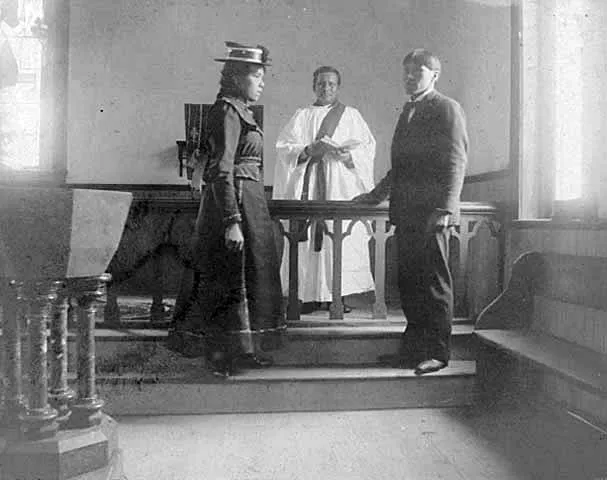
Photo: Unknown authorUnknown author, Public domain, via Wikimedia Commons
There's a moment in a short video posted by a young Mvskoke (Muscogee) woman named Talia that stops you cold. She's sitting outside, maybe on a porch, and she's teaching her grandmother a word in their shared language — except it's the grandmother who's forgotten it, and the granddaughter who remembers. The roles have quietly reversed. The comment section is full of heart emojis and people writing things like this made me cry and this is everything.
It has over 200,000 views.
This is what Indigenous language revitalization looks like in 2024 — intimate, urgent, and happening on the same platforms where people watch cat videos and cooking tutorials.
The Scale of What's Been Lost
Before we talk about what's being built, it's worth sitting with what's been destroyed. The United States is home to over 150 Indigenous languages that linguists classify as endangered, with dozens more already gone silent within living memory. The mechanisms of that loss — boarding schools designed to strip Native children of their languages, sustained federal policies of cultural erasure, forced relocations that separated communities — weren't accidents. They were deliberate.
The result is that in many nations, fluent first-language speakers are elderly, and the window for direct transmission is narrowing fast. For some languages, there may be fewer than a dozen fully fluent speakers left. The weight of that reality sits on younger generations who grew up between worlds: connected to their culture by family and ceremony, but cut off from the full depth of their ancestral tongue.
Digital tools didn't create this crisis. But they're offering something the crisis urgently needs: speed, reach, and accessibility.
Sound as Sovereignty
Audio has always been central to Indigenous cultural life. Oral tradition isn't a lesser form of record-keeping — it's a sophisticated, living technology for transmitting knowledge, law, history, and relationship across generations. Songs carry medicine. Stories carry maps. The voice itself is an instrument of cultural continuity.
What's changed is the infrastructure around that voice. A fluent elder in rural New Mexico can now record a traditional story on a phone, and a diaspora community member in Chicago can hear it the same afternoon. A group of teenagers in the Pacific Northwest can build a shared vocabulary app using recordings from their grandparents. A musician in Oklahoma can layer traditional Osage vocal patterns over contemporary beats and post it somewhere the whole world can find it.
The Lakota Language Consortium, the First Voices platform, and dozens of tribally-run digital archives are doing the institutional work of documentation and preservation. But alongside those formal efforts, something more spontaneous — and in some ways more electric — is happening on social media.
TikTok, Podcasts, and the New Oral Tradition
Spend some time searching Indigenous language content on TikTok or Instagram and you'll find a thriving, joyful ecosystem. There are daily word-of-the-day posts in Diné Bizaad (Navajo), Cherokee, Ojibwe, and Haudenosaunee languages. There are cooking videos narrated entirely in endangered languages, with subtitles as a secondary option, not the primary one. There are language teachers doing call-and-response lessons where followers practice pronunciation in the comments.
Amarisa, a 24-year-old Diné woman who runs a language account with over 30,000 followers, started posting because she was embarrassed by how little of her grandmother's language she'd retained. "I thought, if I'm going to learn it, I'm going to learn it out loud," she says. "And then people started learning with me."
Her account has become something she didn't plan for: a community space where Diné people scattered across the country check in daily, correct each other gently, share memories, and celebrate small victories. A grandmother in Window Rock messages her regularly to say she played one of the videos for her great-grandchildren.
Podcasts are doing something different but equally vital. Projects like Myaamia Voices (from the Miami Tribe of Oklahoma in partnership with Miami University) and community-run audio series from nations including the Confederated Salish and Kootenai Tribes are creating long-form audio spaces where elders tell stories, discuss ceremony, and speak in their languages at length — not as museum pieces, but as living conversation.
These recordings are dual-purpose: they're archives for the future and they're listening material for learners right now.
The Intergenerational Current
What makes these digital projects distinct from previous language preservation efforts is the direction of the current. Traditionally, revitalization has been framed as elders teaching youth — and that transmission remains absolutely essential. But digital platforms have introduced something new: younger community members, fluent in both their ancestral languages and the grammar of internet culture, are becoming bridges in ways their elders couldn't have anticipated.
They're translating memes. They're writing song lyrics. They're building Discord servers where community members practice conversation. They're creating the kind of casual, everyday linguistic environment — the water-cooler chatter, the inside jokes, the slang — that a language needs to feel alive rather than preserved.
This isn't without tension. Questions about what's sacred and what's shareable, about who has authority to teach and represent language publicly, are ongoing and real. Indigenous communities are not monolithic, and the relationship between digital visibility and cultural protection is complex. Some knowledge isn't meant to travel beyond ceremony. Navigating that boundary thoughtfully is part of the work.
But many language advocates argue that the risk of over-sharing is far smaller than the risk of silence.
Building Infrastructure, Not Just Content
Beyond social media, Indigenous-led organizations are building more durable digital infrastructure. The First Voices platform, developed with direct tribal involvement, hosts interactive language archives for over 70 communities. Several tribal colleges have launched community audio studios — accessible, low-barrier recording spaces — specifically for elder oral history projects. Some nations have partnered with linguists to develop language-learning apps built on tribal terms, not Silicon Valley assumptions about what a language app should do.
Funding remains a persistent challenge. Many of these projects run on a mix of small grants, volunteer labor, and sheer determination. The federal government's track record on supporting what it once actively suppressed is, to put it diplomatically, uneven.
But the momentum is real. And the stakes are clear to everyone involved.
What Survival Sounds Like
Back to Talia's video, and that moment of reversal — the granddaughter teaching the grandmother a word that colonial policy nearly erased from both their memories.
What's happening in that clip isn't just language learning. It's a community refusing the ending that was written for it. It's a generation picking up tools that didn't exist twenty years ago and using them for something far older than the internet: the insistence that their people's words, stories, and ways of knowing the world deserve to continue.
The languages are speaking. The question is whether the rest of us are listening.