The Felt Revolution: Why America's Weirdest Art Form Is Having a Community Moment
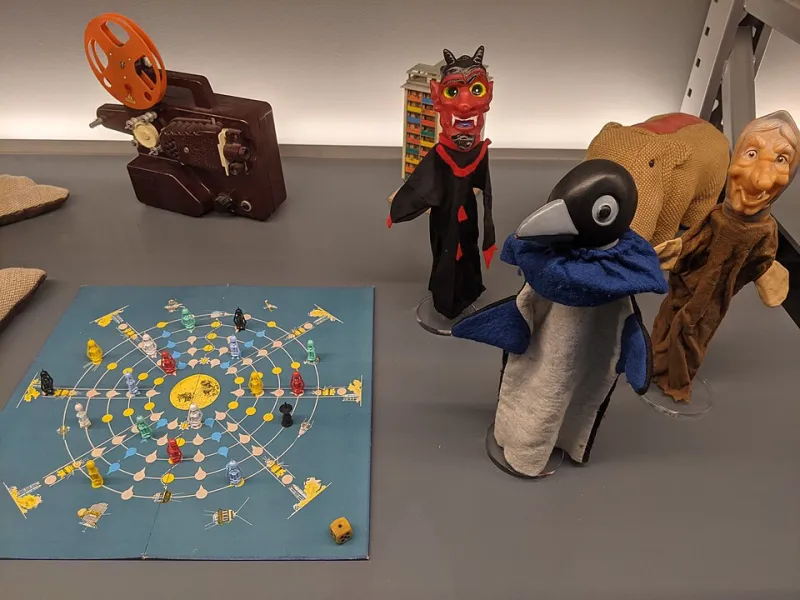
Photo: Roller Coaster Philosophy, CC BY 2.0, via Wikimedia Commons
Walk into the back room of a certain Portland dive bar on a Thursday night and you might find a grown man in a suit having an existential crisis — through a sock. The crowd is drinking local beer. The puppeteer is sweating behind a cardboard stage. Nobody is on their phone. This is a puppet slam, and it's one of the fastest-spending weird nights in American community life.
Not Just for Kids Anymore
Puppetry has spent the last century stuck in a cultural corner, filed somewhere between birthday parties and Sesame Street. But across the country, the art form is breaking out of the children's section. Puppet slams — short, edgy variety shows where amateur and professional puppeteers share a bill — now happen regularly in cities from Minneapolis to Asheville. The material ranges from absurdist comedy to raw personal storytelling, and the audiences are overwhelmingly adults.
The appeal isn't hard to figure out. Puppetry lets people say things through felt and foam that they'd never say with their own faces. There's a psychological loophole in a puppet: it's you, but it's also not you. For performers, that's liberation. For audiences, it's disarming in the best way.
The Library Is the New Puppet Workshop
Some of the most exciting stuff is happening in the least glamorous venues imaginable. Public libraries — already the undisputed champions of free community everything — have started running what some librarians call "puppet labs." Kids learn shadow theater using overhead projectors and cardboard cutouts. Teens build rod puppets from dowels and old T-shirts. Retirees show up too, because why should the eight-year-olds have all the fun?
In Chicago, a branch library hosts a monthly shadow-puppet workshop where participants retell folk tales from their own heritage — Polish legends one month, Mexican ghost stories the next. Admission costs nothing. Materials cost almost nothing. That's the whole point.
Zero Budget, Infinite Possibility
Here's what makes puppetry the most democratic performance art in America: the barrier to entry is essentially a hot glue gun and the willingness to look ridiculous.
Compare that to, say, film, where a decent camera rig can run thousands of dollars. Or theater, where stage rights, licensing fees, and rehearsal space add up fast. A puppet troupe can form in someone's garage with materials rescued from a thrift store. A coat becomes a monster. A broom becomes a marionette. Old gloves become a family of characters with surprisingly strong opinions.
The great puppeteer Jim Henson understood this decades ago — his earliest creations were scraps of fabric and ping-pong ball eyes. The spirit of that scrappiness never left. It just went underground, into community centers and church basements and yes, bars.
Puppetry as a Mirror
There's also something deeper happening. In an era when so much entertainment is algorithmically generated and focus-grouped to death, a neighborhood puppet show is gloriously unpolished and unmistakably local. The jokes land because they're about the neighborhood. The stories matter because the storyteller is sitting three rows back.
Community troupes are increasingly using puppets to tackle subjects that are hard to talk about directly. In one Midwest town, a mixed-age troupe created a show about the closure of the local factory — told through the eyes of the machines. In another, teens built a piece about social media pressure that hit harder than any assembly ever could. Puppets let communities laugh at themselves and grieve together in the same breath.
How to Get In (No Experience Required)
If this all sounds appealing, the entry point is closer than you think:
- Check your library's event calendar. Puppet workshops and performances are quietly multiplying there.
- Look for a puppet slam near you. The Puppet Slam Network keeps a listing of shows across the country, and most welcome first-timers.
- Just start making. A sock, some felt, and a glue gun will get you further than you'd expect. There are more free tutorials online than any one person could watch.
- Bring it to a block party. A pop-up puppet stage is the cheapest possible way to become the most interesting person on your street.
The Oldest Technology for Telling the Truth
Puppetry is one of humanity's oldest performance traditions — versions of it appear in nearly every culture on earth, from Japanese bunraku to Indonesian wayang to the carnival traditions of the American South. Its revival isn't nostalgia. It's a reminder that the tools of culture don't have to be expensive or professional to be powerful.
Sometimes the most honest thing in the room is a puppet with mismatched eyes, operated by your neighbor, saying something everybody's been thinking. Long live the felt revolution.